
Costco

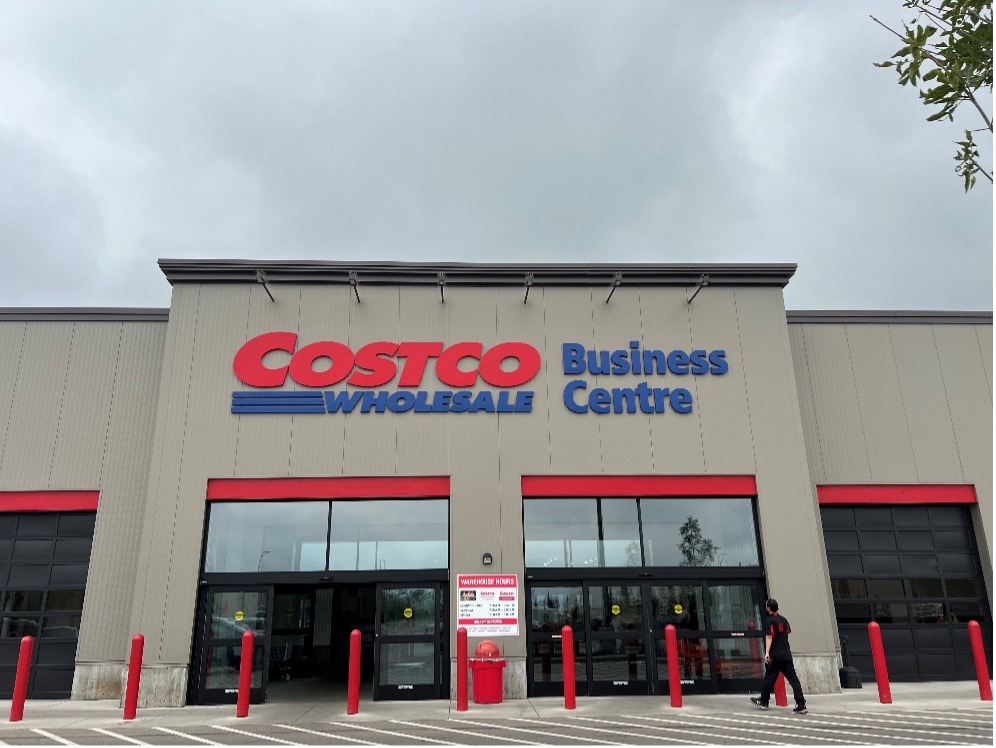
With the cost of groceries these days, everyone is doing everything to save money. I will share my knowledge on how to save money and how to read labels, I know a lot of my friends shop at Costco. This is my first blog; I am going to give you a little insight into how these giants make huge profits. I look forward to your comments and feedback.
I am not a big fan of Costco in some areas, especially in the meat department, there are a lot of things they do to the consumer that I think aren’t right, and other grocers like Superstore are now doing the same practices. They are not doing anything illegal, but some people including me find it unethical. (My 2 Cents) Follow me on some fact-finding and you can’t make your own decisions, I am just going to share some things that I have uncovered, my fact-finding trip to Costco last week? I have known about these things for a long time, I just took pictures to prove a point.
What’s that you say? What is Costco doing? Just a few head scratches.
#1 Selling Ungraded Meat.
#2 Needling Meat.
#3 Flooding our market with imported meat.
What the hell is ungraded meat you say? It’s meat that is fit for human consumption, but it isn’t graded. Tell me Shawn how do they grade meat in Canada?
GRADED PRODUCT VS UNGRADED PRODUCT
Beef is graded in two ways: quality grades for tenderness, juiciness, and flavor; and yield grades are a prediction of the percentage of boneless retail cuts from the four primal cuts (round, loin, rib, and chuck). A beef carcass is graded by a certified and designated grader only after it bears a CFIA meat inspection stamp.
From a consumer standpoint, what do these quality beef grades mean? Beef grades measure several characteristics that reflect the overall quality of the meat.
Grading attempts to ensure that consumers have an improved product through greater consistency and predictability in the eating quality of specific grades of beef. In Canada, our top beef grade is Canada Prime, followed by Canada AAA, Canada AA, and Canada A.
Grading is not mandatory, but the grade is the commonly accepted criteria used to establish market value. Grading is intended to place carcasses into uniform groups of similar quality, yield, and commercial value to facilitate marketing and production decisions.
The Canadian Beef Grading Agency (CBGA) is a private not-for-profit corporation accredited by the Canadian Food Inspection Agency to deliver grading services for beef carcasses in Canada. The beef grade standards or “Requirements” for what constitutes a grade are managed by the industry Livestock Grade Requirements Standing Committee, as overseen by the Board of Directors of the CBGA. These Requirements are empowered through incorporation by reference in the Safe Food for Canadians Regulations, as established by the Canadian Food Inspection Agency.
As you can see, there is a lot involved when it comes to grading beef.
So, what is Ungraded Beef?
Essentially, you’re getting a product that is inspected by CFIA and meets the SFCR so is safe to eat, and is edible, but you don’t necessarily know what you’re getting from a quality perspective.
There have been recent media reports and posts commenting on the import of Ungraded Mexican beef into Canada.
All meat products (Graded and Ungraded) sold in Canada must first be inspected by the Canadian Food Inspection Agency (CFIA). Canadian food safety has high standards recognized internationally. Any meat product imported from one of the approved countries by CFIA has been deemed equivalent to meet Canadian food safety standards.
Therefore, the term “ungraded” does not mean “uninspected” or “unsafe”.
It is not permitted to use a Canada TM grade name on a product for which the regulations do not prescribe a grade standard. As a rule, a Canada TM grade name cannot be applied in a foreign facility, nor can a foreign grade name be applied in Canada. It is also not permitted to apply or use anything that resembles a grade name, or that is likely to be mistaken for.
So, what does this mean? It means you are not supporting Canadian Beef Farmers, you are compromising the quality of an item for your family because you don’t know what you are eating and sometimes basing it on price.
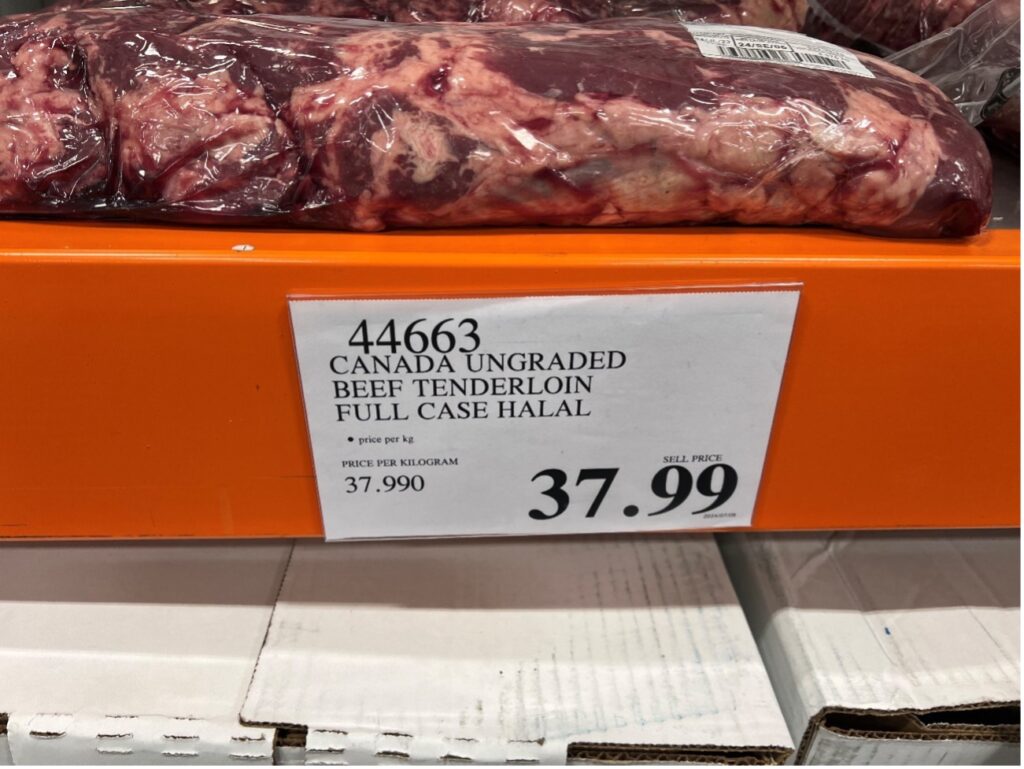
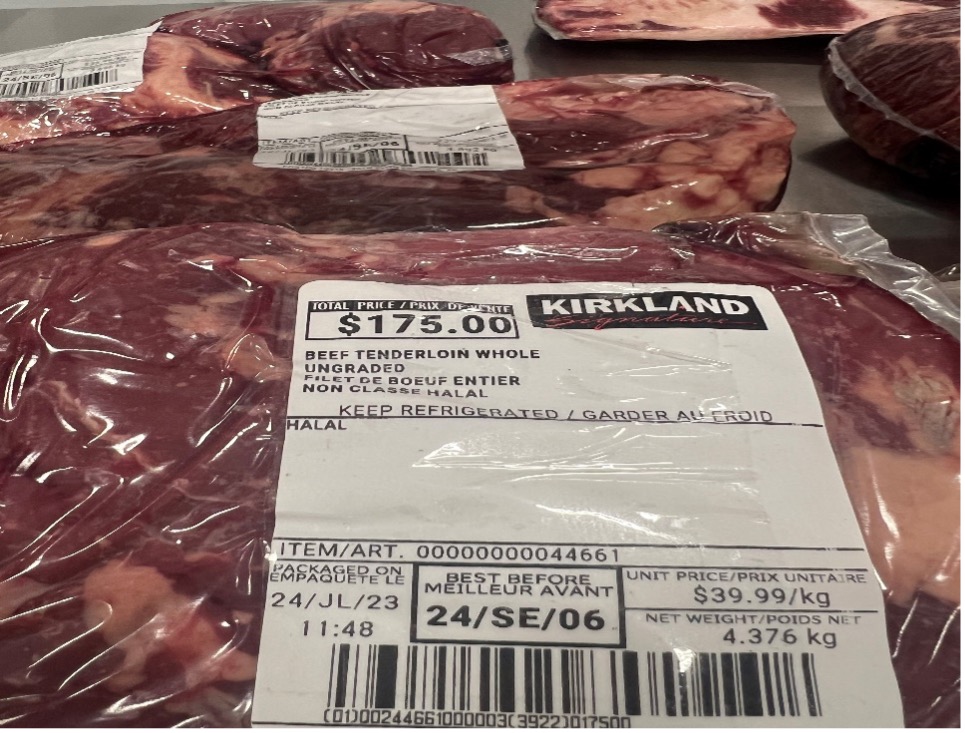
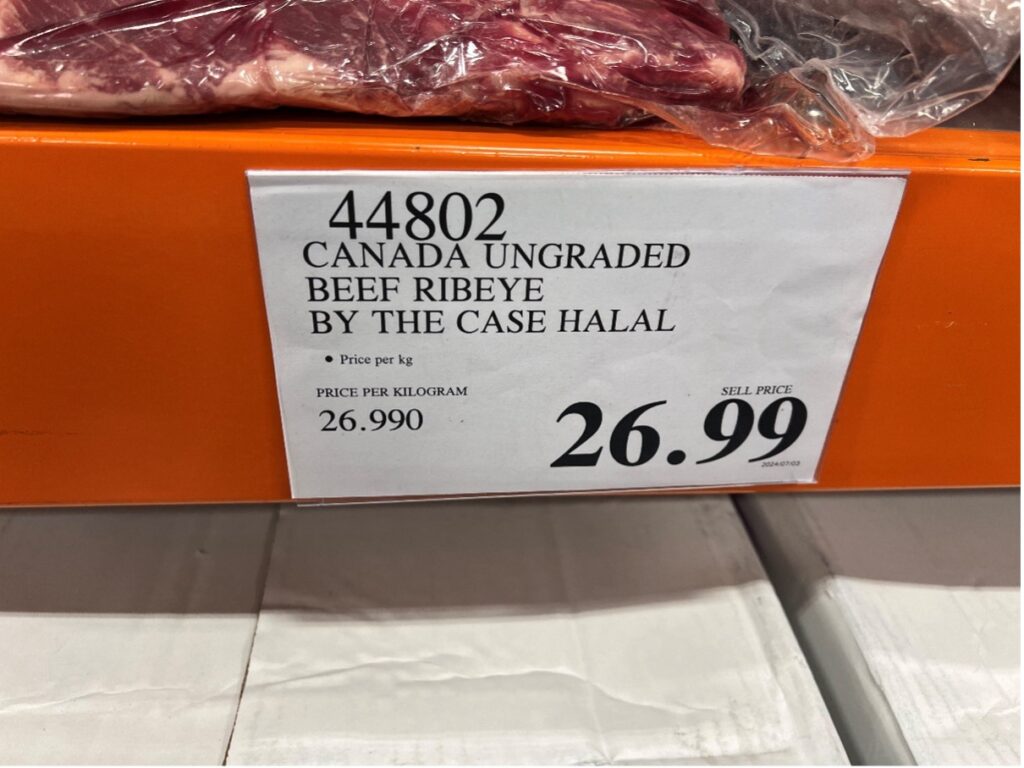
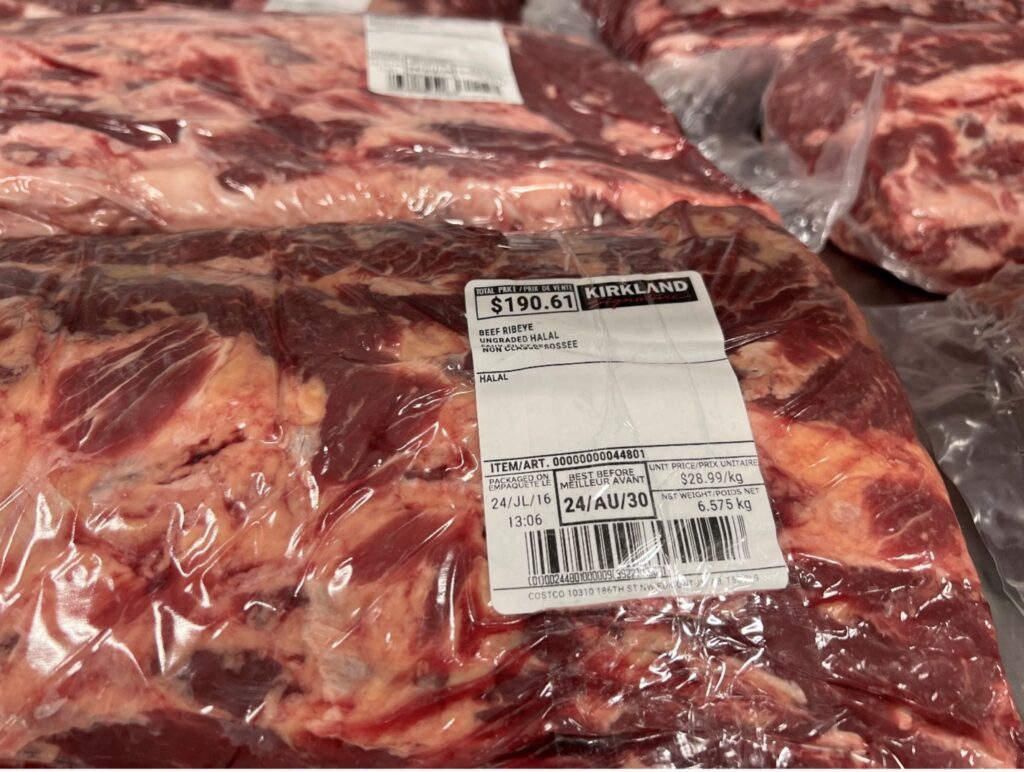
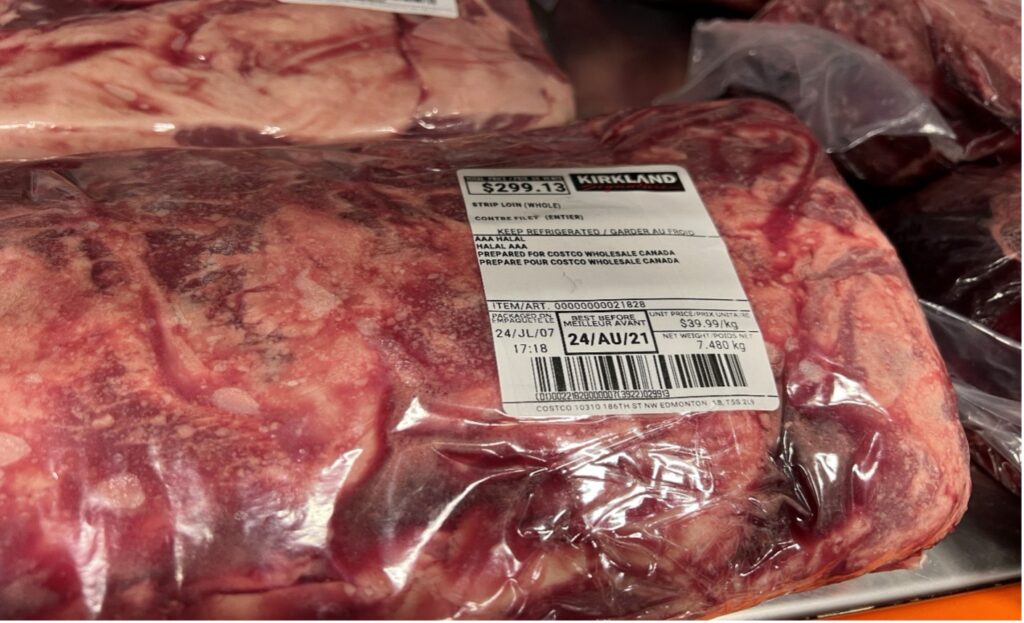
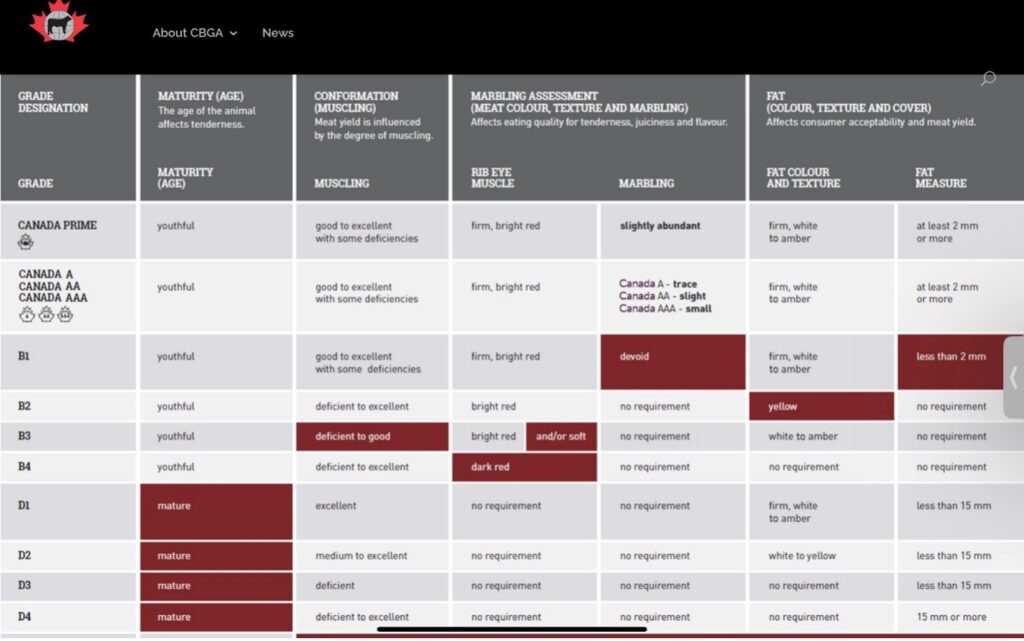
This Grading Chart tells you how meat inspection
My second issue with Costco is that Needling Meat
What is it? Needling is where meat is tenderized with little needles and sometimes injected with the product. Pros and Cons of Needling
Pros,
- Makes it tender
- More profitable for grocery stores
- Uses older products to make it more desirable
Cons
- Many outbreaks of E. coli
- Health and Safety
The biggest E. coli outbreak was through XL Foods in Brooks and Costco in 2012, which had a huge impact on the beef industry. This was all to do needling of meat, since this happened, grocers have to display that the items were mechanically tenderized
If you buy these products you need to cook them to more than 145 degrees (Med-Med Well)
Costco sells a lot of needled products, and they label them AAA, this makes no sense to me. Why would they take a premium product and tenderize an
already tender steak? If you buy these items, please be careful, I wouldn’t suggest purchasing these items